
Publication date: 01/23/2026
Sail and Clean Project: an Atlantic voyage for environmental protection
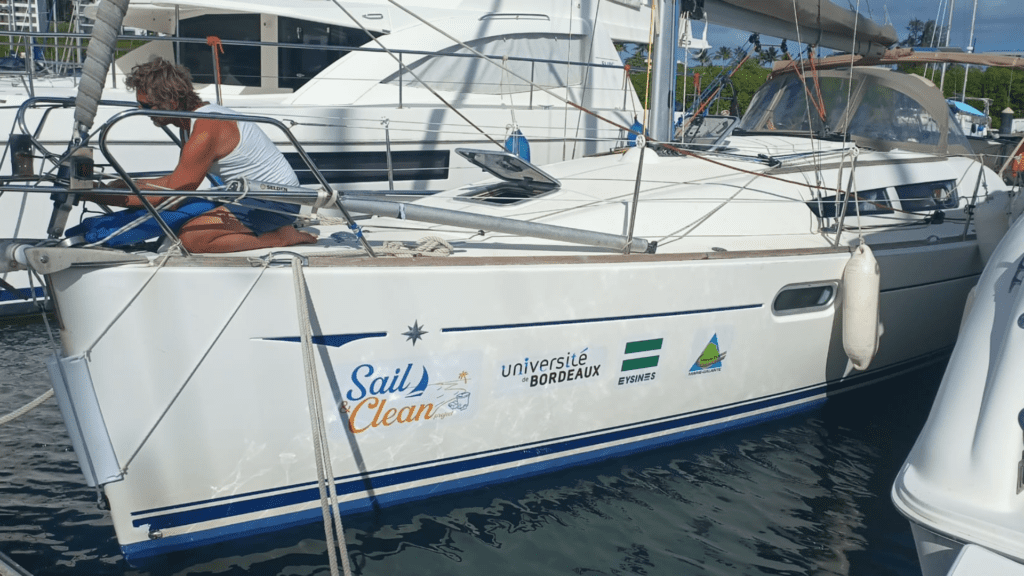
The Sail and Clean Project is an initiative aimed at raising awareness about ocean protection and combating plastic pollution – both at sea and on land. Julien Poublan, owner of a Sun Odyssey 36i moored at Port Médoc within the Port Adhoc network, is the project leader.
The sailor chose to embark on an Atlantic sailing tour to collect waste, carry out clean-up operations, conduct scientific surveys to better understand and preserve marine ecosystems, and also meet local communities to raise awareness.
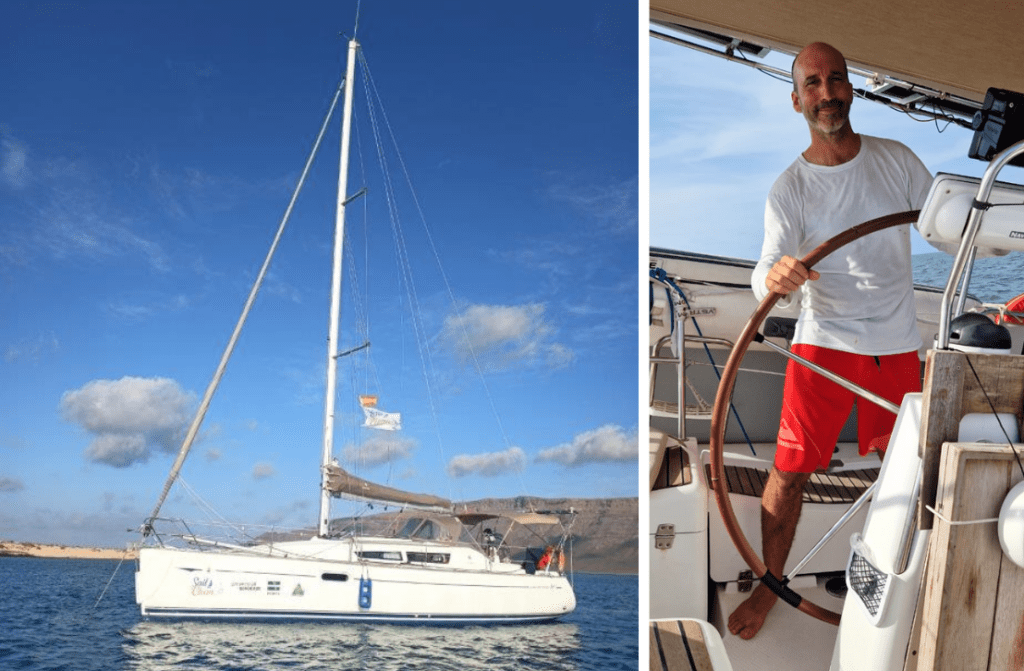
After several months of preparation and planning, the Sail and Clean Project officially began in late August 2025. Since then, the Port Adhoc teams have been closely following Julien’s adventures… So how did he experience the first half of the journey?
September to December 2025: The voyage and sailings
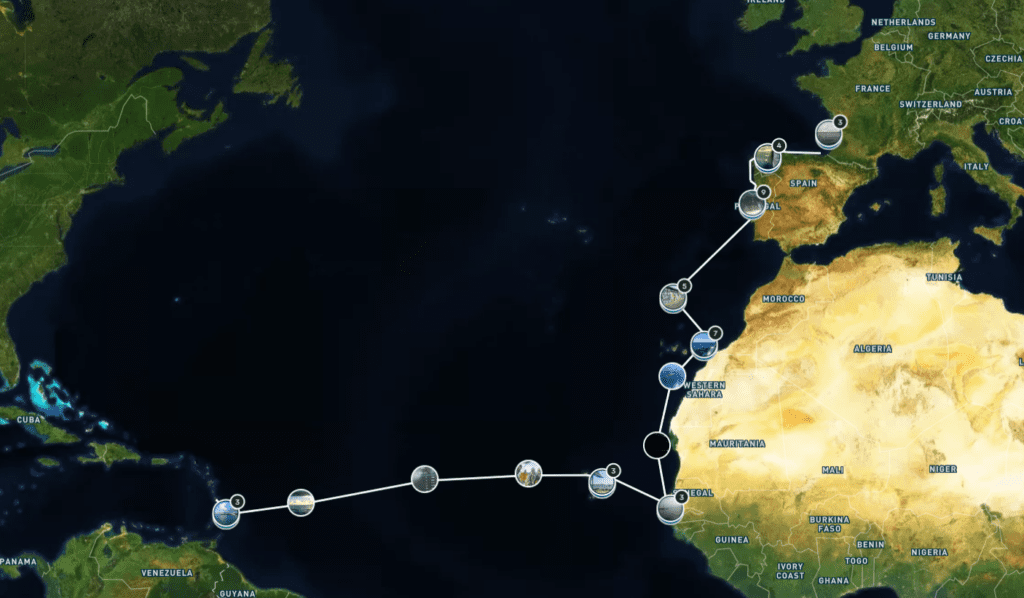
“Since leaving France at the end of summer 2025, I have sailed over 5,000 nautical miles. Désirade has carried me – and the crew members who joined me along the route – all the way to Barbados. On the way to the Caribbean, we were fortunate to make some beautiful stops in Spain, Portugal, Madeira, the Canary Islands, Senegal, and Cape Verde.”
So far, 25 people have joined the sailor aboard the yacht, participating in one or several passages in coastal or offshore waters:
“I have been lucky to share all my sailings with men, women, and families… who came aboard to live the adventure with me. Each person contributed, in their own way, to the clean-up and ocean protection missions, as well as to the awareness-raising activities during stops. With the boat clearly branded, it’s quite easy to make contact with other sailors moored nearby on their own boats, as well as with local communities!”
Waste collection operations at various stops
On the beaches and coasts he visited, Julien encountered a large amount of single-use plastics and fishing-related waste.
“It’s incredible: for some, the ocean really is a dumping ground! Several times a week, when we were not sailing, we went ashore at stopover points with several shopping bags for waste collection sessions. We noticed that waste is everywhere – only the beaches visited by tourists in very popular destinations are regularly cleaned.”
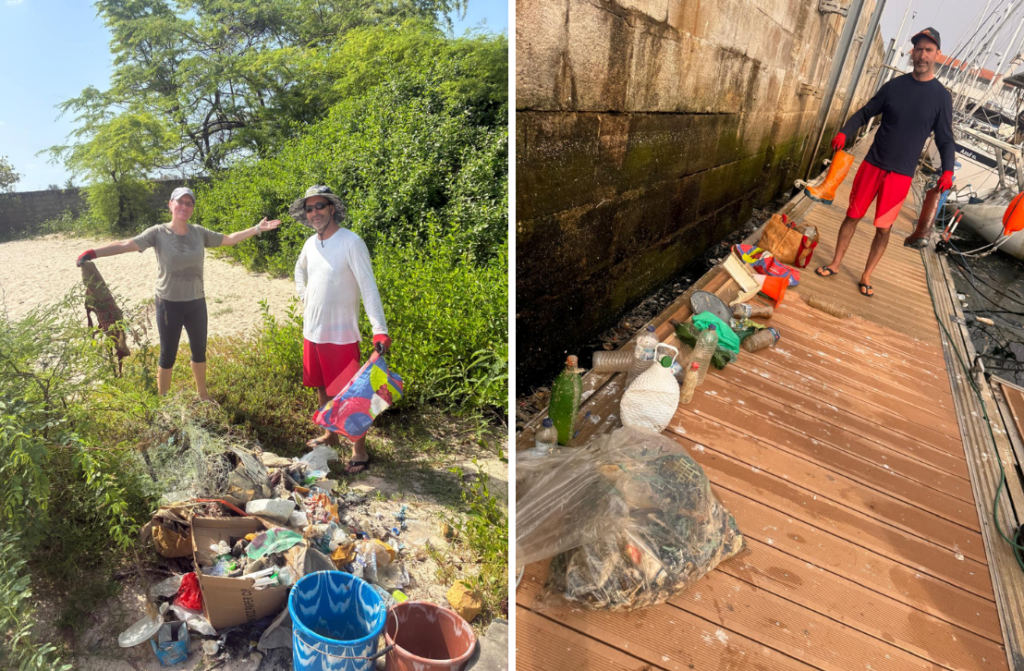
“We carried out several major collections, for example in Porto where we were more than 20 people with the Surfrider Foundation, or in a nearby port where we collected over 50 kg of waste: shoes and boots, bottles, plastic bags, construction cones, pens, food packaging…”
For Julien, the most memorable collection of this first part of the journey took place in Senegal:
“In Dakar, some locals simply throw their rubbish 20 metres from the ocean. The large bay is very polluted: when we arrived, we thought that despite all our efforts, it would be really difficult to make an impact. But I managed to motivate the Dakar Sailing Club, and we carried out a waste collection session on their dedicated area. We mobilised 30 people for a full day, and the locals had to bring in a skip to collect the waste.”
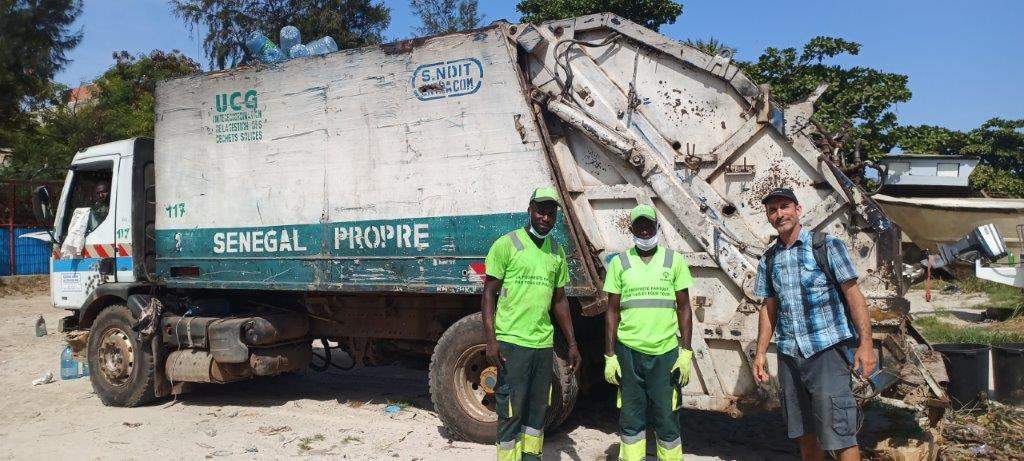
“Don’t think that pollution disappears as you sail away: during the transatlantic crossing, we still encountered plastic waste almost every day. If not collected and treated, this waste ends up as microplastics, ingested by wildlife and eventually by humans.”
From Julien’s perspective, the best approach as consumers would be to avoid using plastic products entirely:
“Here, we collect what washes up on the coasts. But it would be better to sort and recycle waste rather than throw it into nature! Even before disposal, we should reflect on better consumption: there is a lot of plastic we simply don’t need and could stop producing. Each of us has a role to play individually, but if there were large-scale national or international actions, they could really make a difference.”
Encounter with sargassum in the Atlantic
During the “outbound” Atlantic crossing, the crew of Désirade also encountered sargassum patches: brown algae that float and accumulate at the ocean surface. Present in increasing quantities due to environmental imbalances, they hinder local wildlife development and cause significant problems on land when they wash up in large amounts.
“As part of the project, I committed to conducting scientific surveys for the universities of Bordeaux, La Rochelle, and Guadeloupe. With the crew who accompanied me from Cape Verde to Barbados, we observed huge sargassum mats from the mid-point of the crossing, after 7–8 days at sea. These are billions of tonnes that will arrive on the coasts and cause a disaster in terms of health, economy, and tourism.”
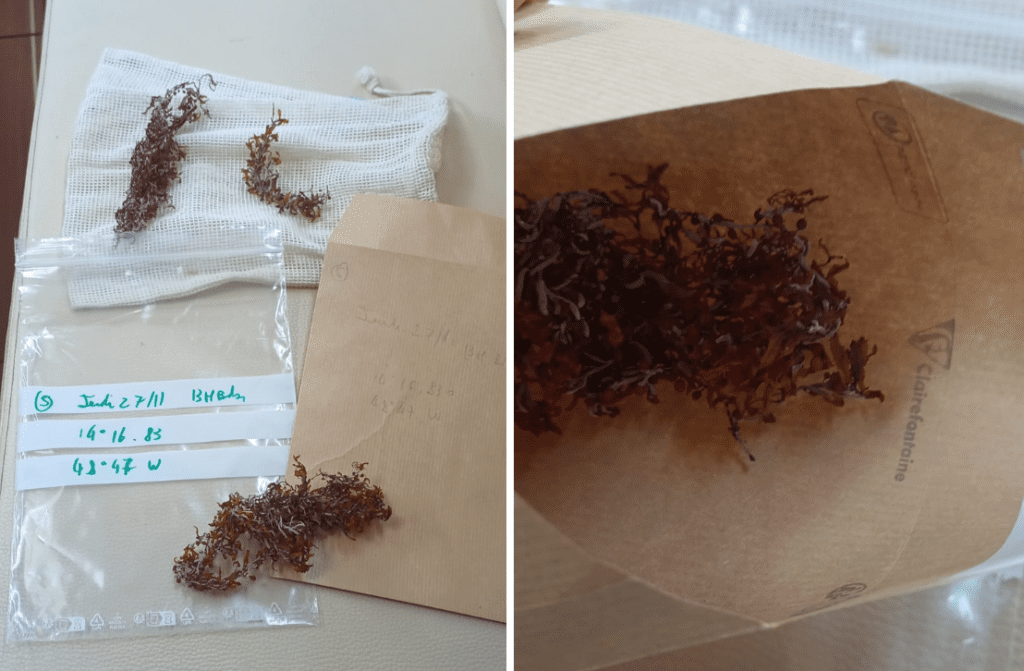
Julien and the other travellers collected various samples, carefully noting the day, time, and GPS coordinates of each site. The algae were dried for three days, stored in a kraft envelope, and will soon be delivered to the University of Martinique, which will liaise with mainland France. These scientific studies will help improve understanding of plastic waste and heavy metals in the ocean.
After this first part of the journey, Julien and his boat will remain in the Antilles region for four months, until early spring. They will then embark on the return transatlantic crossing, still accompanied by passengers, returning to France next summer – around mid-July.


