

Publication date: 06/24/2026
Many sailors experience this moment for the first time on the IJsselmeer.
👉 They leave the shelter of the harbour. 👉 The wind fills the sails. 👉 The shoreline grows smaller.
And suddenly, this inland body of water no longer feels like a lake, but almost like a small sea. Welcome to the IJsselmeer!
Around Lelystad, relatively predictable conditions meet authentic, dynamic sailing. Wind systems build up quickly. Weather changes are noticeable. Short, steep waves demand attention. At the same time, the area remains far more manageable than the North Sea or the open Baltic Sea.
For many crews, the IJsselmeer is therefore the ideal middle ground: challenging enough to remain interesting from a sailing perspective, yet without the harshness of a true offshore sailing ground.
Those who sail around Lelystad experience a region that is constantly changing. And that is precisely why it is worth gaining a real understanding of the local wind and weather conditions.
The IJsselmeer is not a typical inland sailing area
From a geographical perspective, the IJsselmeer is an inland waterway. From a sailor’s perspective, however, it often feels quite different.
Its vast open water surface allows the wind to build uninterrupted over many kilometres. As a result, conditions are often more reminiscent of coastal sailing areas than of smaller lakes or sheltered inland waters. This characteristic is particularly evident around Lelystad.
The region enjoys a strategic location between the Markermeer and the IJsselmeer, providing quick access to very different sailing conditions. Even short passages can bring noticeable changes in wind, wave patterns and atmosphere.
On calm summer days, the area can feel almost gentle: wide horizons, steady breezes and long, relaxed courses. Yet when the wind increases, the picture changes rapidly.
This is when the characteristic short IJsselmeer waves develop. Although smaller than North Sea waves, they are often steeper and can be more uncomfortable. Inexperienced crews are frequently surprised by this. For that reason, the IJsselmeer should always be approached with respect and attention.
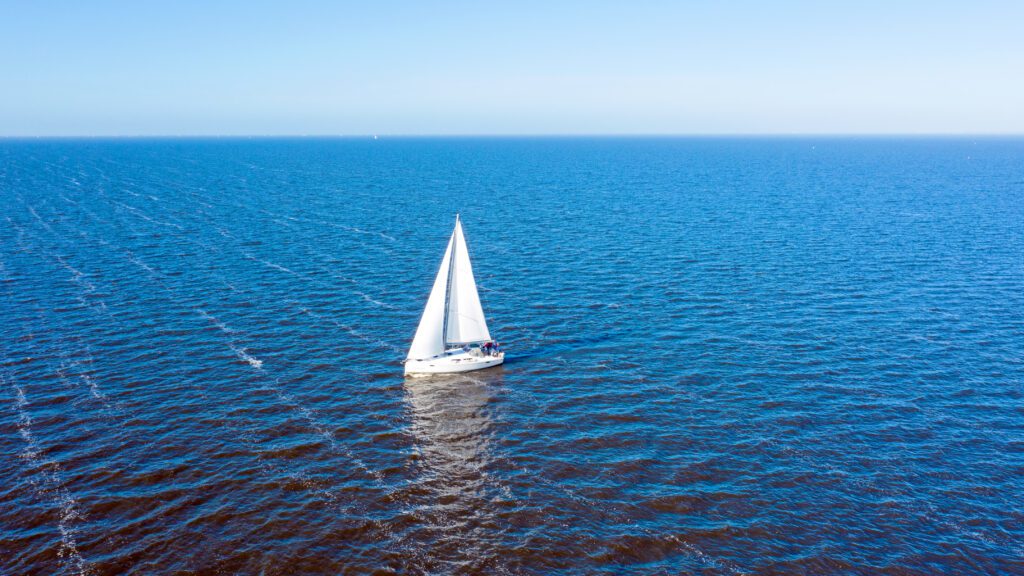
Typical wind conditions around Lelystad
Westerly winds shape the area
The prevailing winds on the IJsselmeer generally come from the west: westerly, south-westerly and north-westerly winds dominate much of the sailing season. This has a direct impact on the sailing experience around Lelystad.
👉 Westerly winds have plenty of open water over which to build. Even moderate wind strengths can therefore generate noticeable wave fields.
👉 During prolonged south-westerly winds in particular, the IJsselmeer reveals its typical character: lively, sporty and sometimes surprisingly powerful.
➡️ Many experienced sailors appreciate exactly these conditions, while newcomers occasionally underestimate them.
Why Force 4 can feel different on the IJsselmeer
On smaller inland waters, Force 4 is often considered fairly harmless. On the IJsselmeer, the same wind strength can feel considerably more demanding.
The reason lies in what sailors call the fetch: the distance over which the wind can blow uninterrupted across the water. Because the IJsselmeer is large and open, even moderate winds can create short, steep waves. These slow boats down, generate spray and make movement on board noticeably more active. This becomes particularly evident when sailing upwind.
➡️ Many crews therefore plan more conservatively than they would on smaller inland sailing areas. The IJsselmeer is not dangerous, but it certainly demands attention.
Northerly winds and rapid weather changes
Northerly winds can make the area feel particularly cool and rugged. The air becomes clearer and visibility is often impressive. At the same time, uncomfortable wave patterns can develop, especially on longer open-water passages.
Weather changes on the IJsselmeer can also occur surprisingly quickly. Calm conditions in the morning do not automatically guarantee a relaxed afternoon. Particularly during spring and autumn, weather fronts can move through rapidly. Wind shifts, squall lines and sudden pressure increases are not uncommon.
➡️ Regular weather monitoring is therefore considered an essential part of good seamanship.
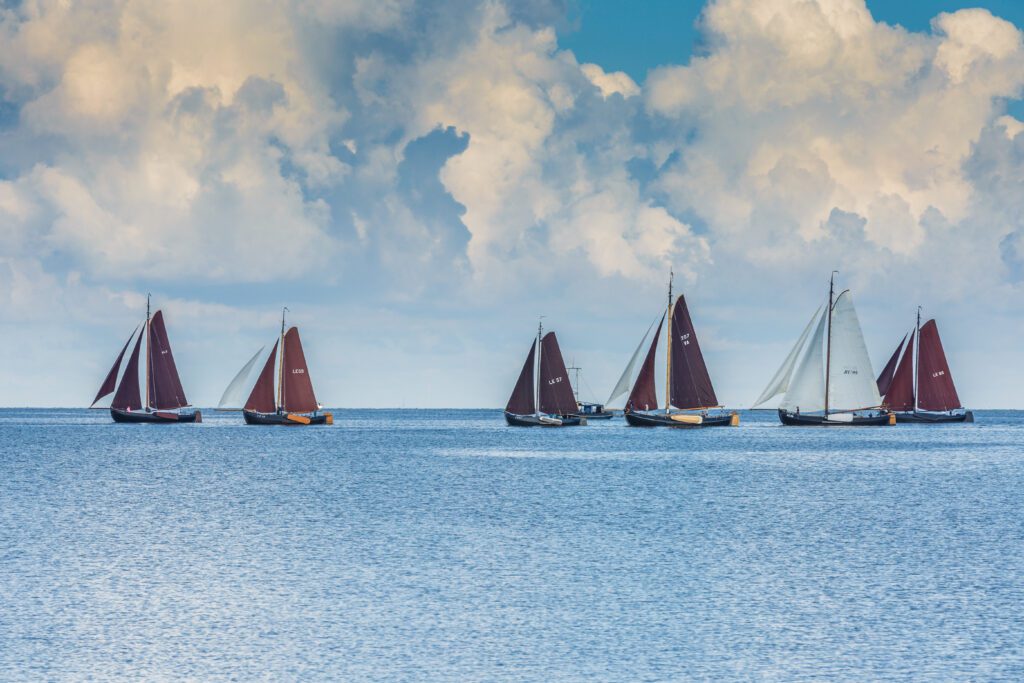
The seasons on the IJsselmeer
Spring: clear, sporty and often underestimated
Many experienced sailors love spring around Lelystad. The harbours are still relatively quiet, the light is exceptionally clear and stable wind patterns often provide excellent sailing conditions. However, the water remains very cold during spring, significantly affecting safety considerations.
A man-overboard situation in water temperatures of 10°C is entirely different from the same situation during midsummer. Many crews also underestimate the combination of sunshine, wind and low temperatures.
➡️ Anyone sailing in spring should adapt clothing, safety equipment and passage planning accordingly.
Summer: The most popular season, but not without challenges
During summer, the IJsselmeer often shows its most accessible side. Warm temperatures. Long days. Lively harbour towns. And generally stable weather conditions. This is one of the main reasons why the Lelystad region is so popular among German sailors.
At the same time, the peak season brings its own challenges: increased traffic on the water, sudden weather changes caused by thunderstorms and crowded harbours during popular weekends. Thermal effects and local wind systems can also mean that forecasts do not always perfectly match actual conditions on the water.
➡️ Flexibility therefore remains important.
Autumn: perhaps the finest sailing of the year
Many long-time IJsselmeer sailors consider autumn to be the best season of all. The air becomes calmer. The light softer. The harbours more relaxed.
At the same time, some of the most rewarding sailing conditions of the year often develop: strong, stable winds without the extreme heat of midsummer. Naturally, autumn also increases the demands on crews. Storm depressions become more frequent. Days grow shorter. Weather windows need to be used more carefully.
➡️ Those who are well prepared often enjoy some of the finest sailing days of the entire year.

Weather apps are not always enough
Almost every sailor today relies on weather apps. And yes, forecasts for the IJsselmeer are often remarkably accurate.
Nevertheless, local knowledge remains extremely valuable. Around Lelystad, different water bodies, land formations and weather systems interact. Small changes can have surprisingly significant effects.
Experienced crews therefore pay attention not only to apps but also to:
- Cloud development
- Changes in air pressure
- Visibility conditions
- The appearance of the water surface
- Local wind patterns
- The behaviour of other boats
➡️ The IJsselmeer often demonstrates that good decisions result from a combination of technology and experience.
Why Lelystad is such a popular base
Lelystad is one of the Netherlands’ most important sailing centres for good reason. The city enjoys an exceptionally strategic location between the Markermeer and the IJsselmeer, offering quick access to a wide variety of cruising options. This allows crews to respond flexibly to changing wind and weather conditions.
👉 When conditions on the open IJsselmeer become more challenging, the more sheltered waters of the Markermeer often provide an attractive alternative.
👉 During stable summer weather, longer passages towards Enkhuizen, Urk or the Frisian coast are easily achievable.
Another major advantage is the excellent sailing infrastructure available:
This is particularly attractive for seasonal berth holders. Weather conditions on the IJsselmeer change regularly, and having a well-connected, professionally equipped home marina makes spontaneous decisions much easier.

If you would like to start exploring berth options in Lelystad, Port Adhoc Group is ready to help.


